
In 2014, the Indian Space Research Organisation (ISRO) successfully achieved the Mars Orbiter Mission, Mangalyaan, succeeding on first attempt and at a price lower than it takes Hollywood to fake space missions. Yet, the next day the NYT carried this cartoon…
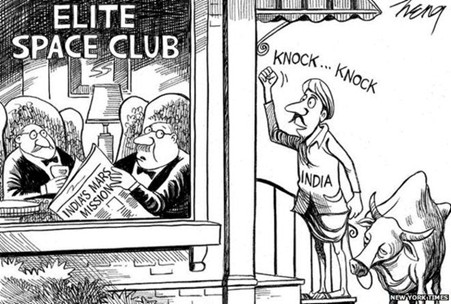
NY Times’ poor taste cartoon in response to the success of Mangalyaan
Besides being offensive it also implies that a nation can only tackle one problem at a time completely paradoxical in today’s age of constant multitasking.
Yet, this notion — that we can only achieve one thing at a time that we should focus all our energies on present problems — is a popular one. It often leads to a common question we’ve been asked since starting Future Tense Inc. “Why the Future?”
The question implies that, in the face of insurmountable challenges of the present imagining better futures is a wasteful exercise. But, if we can’t imagine better futures how will we make better decisions in the present?
A reason for this dilemma is that the imagined futures we see are mostly white, western and male with barely a trace of the diversity of thought and culture that make up most of the world today. The future is treated as something built on a blank slate and their focus is on homogenizing, rather than representation and inclusiveness. Cultural diversity is mostly reduced to exoticisation.
So here’s my take on why we should imagine futures, and diverse ones at that. It is so that we can make better decisions in the present which we hope will eventually lead to more sustainable futures.
Simplistic? Naive even? I know, but it is important to recognise that our current approach to problem solving is reactionary. This leads to band-aid solutions which pose greater challenges in the long term; “traffic has increased, let’s build wider roads (band-aid solution)”. What we really need is proactive thinking “traffic has increased let’s improve public transport (sustainable solution)”. Bluetooth has been available on phones for over a decade and Google maps for a good six years, yet have you noticed how cars don’t have a convenient space for the driver to put their mobile phones? This necessitates the purchase of cheap plastic holders affixed to the windshield.
We have envisioned futures as exciting as space exploration and flying cars (however silly these might be in practice) instead where our current “inspiration” has landed us is basically re-inventing the mundane. The Modernist studio’s latest exploration The New Materialism of the Home is a damning indictment of how narrow our visions really are.

Modernist Studio’s futures vision — A branded life with Domicile™
Another key reason for encouraging futures visioning is to bring diversity into the field. In our experience most futuring exercises devolve into a rehashing of scenarios reminiscent of Blade Runner or ready Player One. The entire vision seems mostly removed from the ‘envisioner’, almost as if in the future they are mere spectators and the future is “going to happen” to them, rather than something they have any agency in shaping. They simply don’t see themselves represented in the futures and therefore can’t see where their cultures continue to fit into the tapestry. Alisha Wormsley’s recently banned billboard in Pittsburgh is a powerful reminder of this phenomenon. That such a strikingly simple statement can evoke so many emotions both negative and positive is a testament to the belief that a select few “own” the future and therefore get to shape it.
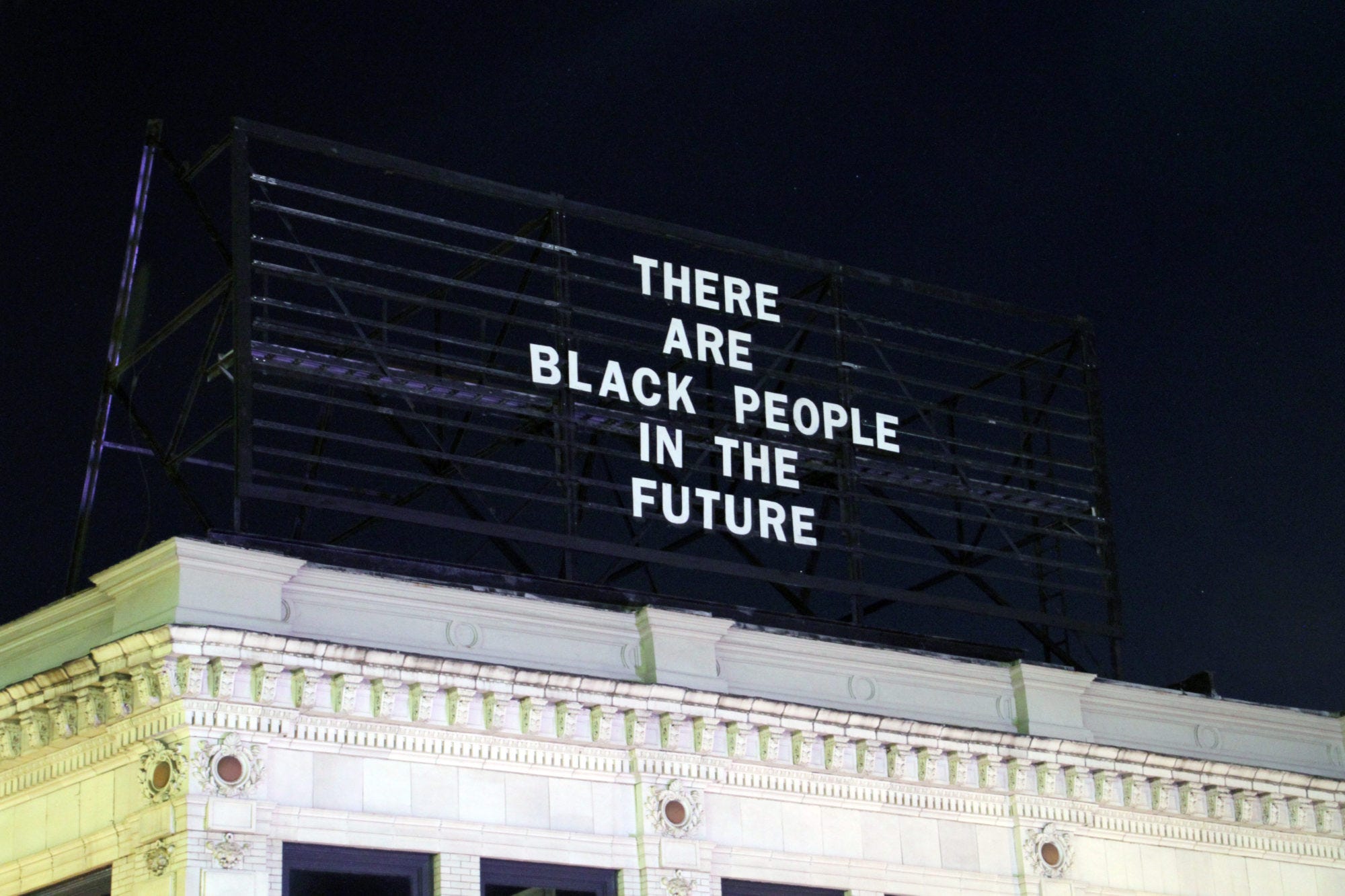
The Last Billboard’s landlord, We Do Property, forced Alisha Wormsley’s text to be taken down over “objections to the content”
There are some bright spots emerging in the field of diverse futures visioning. Decolonized Futures, Indigenous futures, etc. are interesting movements being increasingly adopted across the spectrum. Afrofuturism is a futuring trend that has thrown up powerful work over the years and recently broke through the mainstream with rich realisation in Black Panther’s Wakanda this year. The worldbuilding of Wakanda is especially noteworthy for its focus on the culture rather than the tech. Given the rich lore of Vibranium in the Marvel Comics Universe it would be the easiest thing to focus on the tech-related aspects of the story however what stood out was the respect with which African cultures were represented. The rich culture in the street scenes is completely opposite to the general representation of the dark, dreary and violent street culture depicted in cyberpunk worlds like Blade Runner, Minority Report and most recently Altered Carbon.
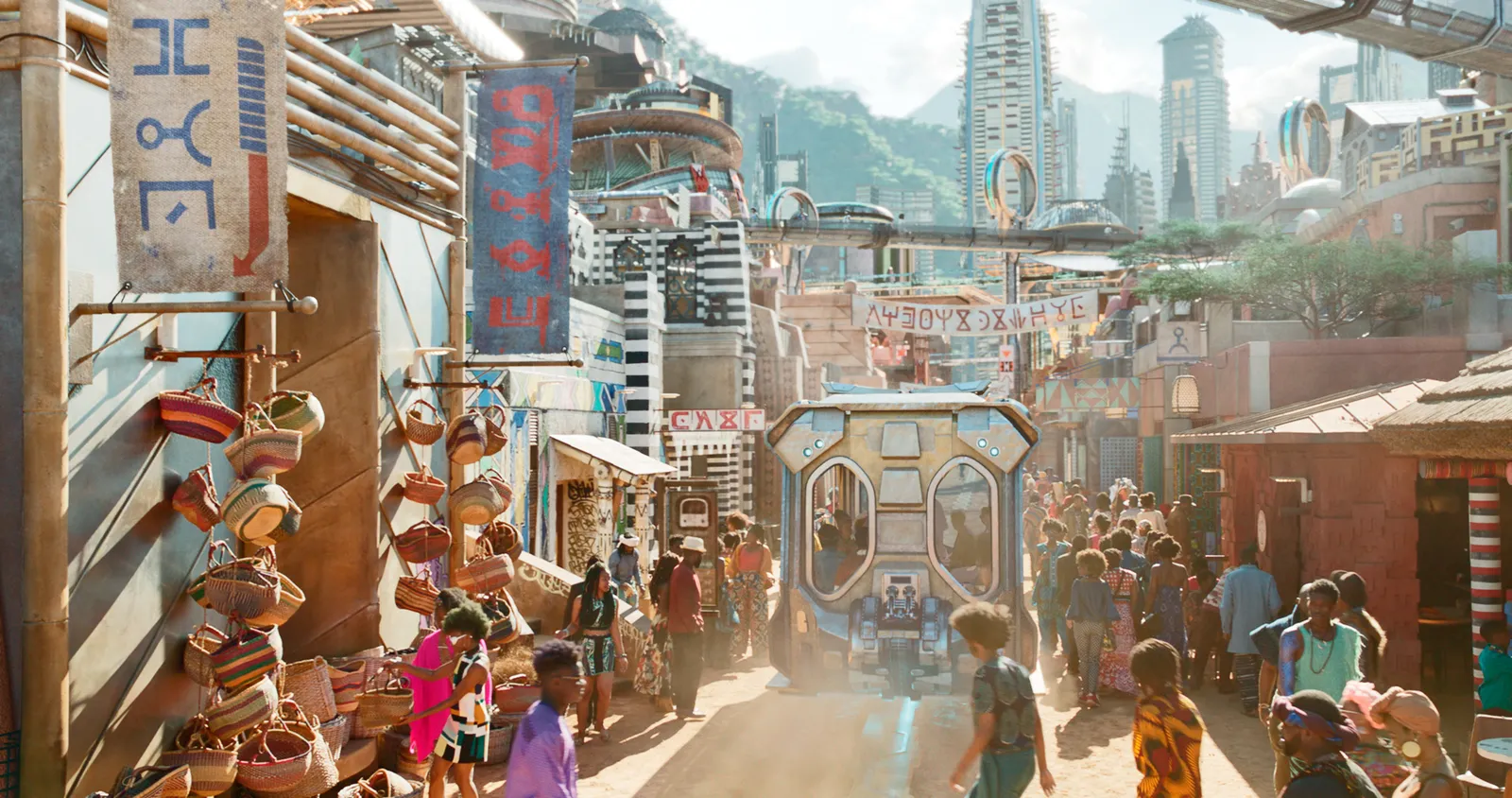
The vibrant streets envisioned by the worldbuilders of Wakanda stand in stark contrast to the standard “grey and glass” worlds of pop culture & Sci Fi
Futurists themselves are becoming a more diverse lot. While nobody gets it right every time, I have experienced, first hand, how welcoming and willing to share the community can be.
In India there is a small but palpable interest in using tools like Human Centered Design & Futures Design to imagine the world of tomorrow with a more Indian worldview. This is a community we hope will grow along with Future Tense Inc. By sharing tools and co-creating new ones to enable more vibrant futures visioning, our hope is that we stop treating the future as a blank slate but a continuing tapestry which grows richer as more perspectives are involved in realising it.
So far at our Mumbai meetups we’ve been fortunate to host some incredible speakers like Ayaz Basrai of The Busride Labs & monika bielskyte (video) who have generously shared their worldview and had engaging conversations with our community. We are hearing murmurs of the brilliant work being done by other like Quicksand’s Antariksha Sanchar and others we hope will join us in conversations in the future.
We started as a meetup community and have over the years evolved into a strategic foresight studio working with organisations to build long term strategies and innovate business models, products and services. So if you happen to be in our neighbourhood with a hankering for a good conversation on futures and design give us a holler!
At Future Tense Inc. we try on different futures for size. Join us, won’t you?